Natural Disaster Policy Gaps: Why Standard Property Policies Exclude Floods and Quakes
Every year, thousands of residential and commercial property owners suffer catastrophic physical damage to their real estate assets, only to encounter an unexpected hurdle during the claims process: their standard property insurance contract explicitly disallows recovery for losses stemming from water inundation, earth movement, or seismic shifts. This realization often occurs precisely when financial relief is needed most, leaving property owners to bear immense repair costs independently.
The gap between public expectations and insurance coverage is not an oversight by underwriting teams. It is a fundamental structural feature of modern indemnity systems. Standard Homeowners (HO-3, HO-5) and Commercial Property (CP 00 10) forms are designed around predictable, localized hazards such as accidental plumbing leaks, localized fires, theft, and windstorms. Incorporating unrestricted catastrophic exposure into standard policy templates would undermine the mathematical stability of primary insurance pools. Understanding the actuarial rationale, historical legal precedents, and structural mechanics of these policy exclusions is essential for building a resilient risk management portfolio.
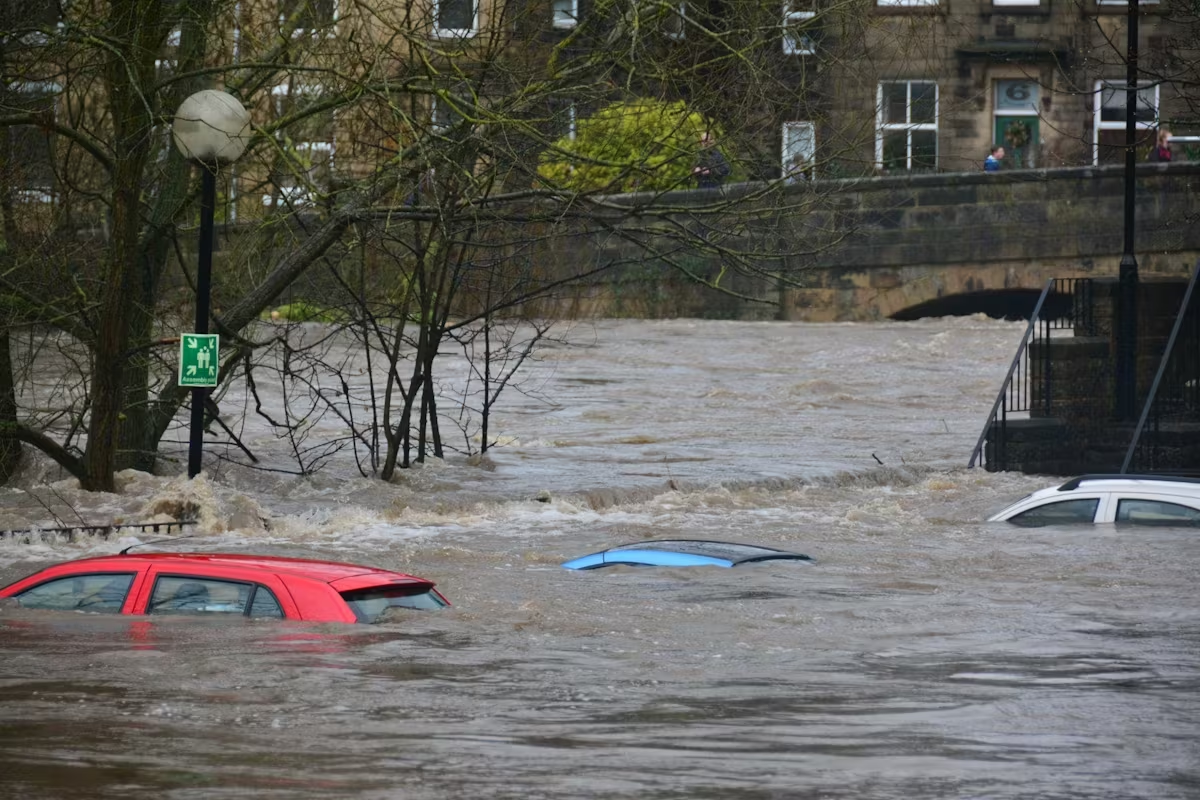
Exclusion Definitions in Property Contracts
Insurers classify natural perils under strict exclusion definitions because catastrophic regional events can overwhelm standard actuarial risk pools. Consequently, secondary policies or specialized endorsements must be purchased separately to cover these specific geographical hazards.
To understand why these carve-outs exist, one must examine the specific contract language governing standard policies. Under standard ISO (Insurance Services Office) formulations, the exclusion clause for water damage encompasses surface water, waves, tidal water, overflow of any body of water, and water-borne material. Crucially, the exclusion applies whether the water flow is driven by wind-driven rain, atmospheric surges, or failing infrastructure.
Similarly, the "Earth Movement" exclusion disallows coverage for shockwaves, soil liquefaction, landslides, mudflows, subsidence, and sinkholes. Standard contracts frequently deploy an "Concurrent Causation" clause, which specifies that if an excluded peril (such as an earthquake) occurs simultaneously with or sets off a covered peril (such as a structural collapse or pipe burst), the entire loss sequence may be excluded unless specifically carved back in by endorsement.
Key Takeaway: Standard property policies utilize strict Anti-Concurrent Causation (ACC) language. If a non-covered peril like surface flooding initiates or contributes to a covered peril like structural foundation cracking, the whole loss is typically denied under primary property forms.
Actuarial Risk Pools and the Problem of Adverse Selection
The fundamental underlying reason for these universal exclusions rests on the principle of risk diversification. Insurance operates by pooling the modest premiums of many property owners to compensate the unpredictable losses of a few. For standard perils like kitchen fires or burst pipes, the probability of claims across a geographic area is distributed independently; a fire in one household does not increase the statistical probability of a fire occurring simultaneously three miles away.
Catastrophic perils break this statistical model completely. A high-magnitude earthquake or a major regional river burst affects tens of thousands of properties within a single square mile simultaneously. This concentration of risk leads to correlation risk, where claims spike rapidly and at scale, threatening the financial reserves of regional insurers.
Furthermore, these catastrophic hazards introduce severe "Adverse Selection." If flood or earthquake coverage were offered as an optional, unbundled inclusion within standard policies without strict rate adjustments, only property owners situated directly along riverbeds, coastal plains, or active tectonic fault lines would opt into the pool. Owners on high ground or stable geological formations would opt out or seek lower rates elsewhere. Without low-risk policyholders paying premiums to balance out high-risk claims, the pool collapses under its own financial weight.
Comparison of Coverage Frameworks
To navigate the landscape of property protection, property managers and homeowners must differentiate between primary policies and secondary, specialized risk mechanisms. The table below outlines how various perils are treated across standard vs. specialized markets:
| Peril Type | Standard Property Policy (HO-3/CP 00 10) | Specialized Mechanism / Policy Form | Underwriting & Valuation Basis |
|---|---|---|---|
| Internal Plumbing Burst | Covered (Sudden & Accidental) | N/A (Included in Primary) | Replacement Cost Value (RCV) |
| Surface Flooding / Storm Surge | Excluded | NFIP / Private Flood Markets | Actual Cash Value (ACV) or RCV subject to strict caps |
| Seismic Shock / Liquefaction | Excluded | Earthquake Endorsement / CEA Policy | High percentage deductibles (e.g., 5% to 25% of building value) |
| Landslide / Subsidence | Excluded | Difference in Conditions (DIC) Policy | Bespoke excess & surplus lines underwriting |
| Windstorm / Hail | Covered (Except high-risk zones) | Separate Wind/Hail Pool (Coastal zones) |
Bridge Strategies: Endorsements, Standalone Forms, and Parametric Solutions
Protecting real estate portfolios requires a multi-layered approach to risk transfer. Property owners should not rely on a single policy to handle diverse perils; instead, they must build a tailored structure using targeted insurance options:
1. National Flood Insurance Program (NFIP) vs. Private Flood Markets
For flood protection, real property owners generally choose between federal programs and emerging private markets. The NFIP offers guaranteed availability across participating communities, but its coverage limits often capped at $250,000 for residential building structures and $100,000 for contents may be insufficient for high-value properties. Private flood insurance markets provide higher liability limits, broader loss-of-use coverage, and flexible valuation terms, though underwriting standards are stricter regarding topographic elevation.
2. Earthquake Riders and Difference in Conditions (DIC)
Earthquake coverage is available via endorsements attached to primary policies or standalone policies from specialty carriers (such as the California Earthquake Authority). These coverage structures frequently utilize percentage-based deductibles calculated against total building insured value, rather than fixed dollar amounts. For large commercial portfolios, securing a Difference in Conditions (DIC) policy provides broad protection against excluded gaps, including flood, quake, and earth movement, within a single master framework.
3. Modern Parametric Insurance Solutions
An emerging approach in property protection is parametric insurance. Unlike traditional indemnity insurance that reimburses actual physical damage expenses measured post-event, parametric contracts pay out fixed amounts automatically based on objective, pre-defined triggers such as an earthquake reaching a specific Richter scale threshold within a designated geographic radius, or floodwaters reaching a specific height gauge. This structure provides rapid cash liquidity to cover immediate operational needs and non-deductible expenses without lengthy loss adjustment procedures.
Proactive Regional Risk Assessment
Our consultancy reviews local topographic and seismic risk factors with clients to ensure their physical assets aren't sitting on unprotected exposure fault lines. Identifying these gaps early prevents devastating uncompensated losses.
A complete risk management program moves beyond simply buying policies; it requires analyzing structural engineering specifications, site elevation models, and soil mechanics. Implementing proactive loss prevention measure such as installing backwater valves, retrofitting foundations with seismic tie-downs, maintaining proper site drainage, and placing critical utilities above base flood elevations helps reduce direct physical loss while positioning properties for favorable secondary market rates.
Navigating property exclusions requires ongoing vigilance. Insurance policies must be systematically reviewed every year alongside updated municipal flood maps, geological fault updates, and structural building modifications to ensure coverage keeps pace with evolving physical risks.