


Term vs Whole Life Insurance: Which Plan Fits Your Timeline?
Buying life insurance can feel hard. The market is full of big words. Sales people often give you mixed advice. Most families face one big choice early on. Should you pay for cover that lasts for a set time? Or should you build a plan that lasts for life and grows cash over the years? The first plan only guards you against a loss. The second plan also builds money that you can use.
People love to debate term life and whole life. But one is not always better than the other. The real choice depends on three things. The first is how well your money works. The second is how much risk you can take. The third is how long you need cover. This guide shows how each plan does in the real world. It looks at market shifts, estate transfers, and how fast you can get to your cash. Your estate is all that you own when you die. We will keep the words plain and the ideas clear. By the end, you will know which plan suits your life.

Understanding Term Life: Pure Risk Protection
Term life insurance is a simple deal. You pay a set fee to an term life insurance firm. This fee is called a premium. In return, the firm agrees to pay a set sum if you die. This sum is the death benefit. It stays the same for the whole term. Most terms last 10, 15, 20, or 30 years. Think of the cover you have on a car, a home, or your health. You pay a fee to guard against a loss. Term life insurance works the same way.
Experts call this pure risk transfer. You pay only for the risk that you might die early. You do not pay for any other feature. Say you die while the plan is active. The person you named on the plan gets the full death benefit. This person is called the beneficiary. They do not pay income tax on the money. Now say you are still alive when the term ends. The plan just stops. You have no cash saved up. You get no payout if you cancel. You also have no more cover. You can keep cover only if you add a rider that lets you convert the plan. A rider is an add-on to your plan. It costs a lot.
Key Benefits of term life insurance
- Most cover for your A term life insurance plan has no savings part, so it costs less. This gives you the most cover for each dollar you pay. A healthy 35-year-old can often buy a $1,000,000 plan for 20 years. It can cost less than $45 a month. That is a small price for a large safety net.
- Costs you can plan for. With a level-premium plan, your rate stays the same. It will not go up or down at any point in the You will always know what you owe. This makes it easy to plan your budget for many years.
- Fits a set time Term life insurance cover works best when you match it to a debt with an end date. Think of a 25-year home loan or other debts. It also fits the years your kids need to grow up and earn their own money. When the debt is gone and the kids are grown, you may no longer need the cover.
Whole Life insurance : Permanent Coverage with Cash Equity
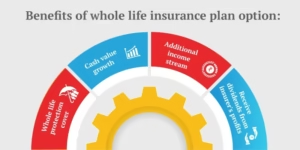
Whole life insurance is a plan for life. It is built to stay active for as long as you live. It runs until the plan matures. That is usually at age 100 or 121. Your payments are split into two parts. One part pays for the risk of death and the cost to run the plan. The other part goes into a cash value account. You do not pay tax on the growth in this account until you take money out. In short, part of each payment buys cover, and part of it builds savings.
The cash value account grows in two ways. First, the insurer sets a guaranteed interest rate. Second, you may get policy dividends. Mutual life insurance firms pay these out. They are not guaranteed. You can also borrow against your cash balance. The loan is tax-free. Some people use this money to fund investments. Some use it to add to their income. Others use it to get through a money crisis. Your cash value acts like a safety net that you can lean on.
The Cost Trade-Off for whole life insurance
Whole life plans promise a payout, and they hold a cash part. So the payments are high. They are often 8 to 12 times more than a term plan for the same age and health. In the first 5 to 10 years, a big share of your early payments goes to sales fees and set-up fees. So your cash value grows slowly at first. You may wait a long time before the account has much in it. This is why whole life suits people who plan to keep the plan for many years.
“Buying whole life just to earn returns often adds fees you do not need. Its strength lies in tax savings, asset safety, and cash for your estate. It is not a way to chase big gains.”
Side-by-Side Comparison
Let us see how these two plans fit your wealth plan. The table below shows how each one works, side by side. Use it to spot the key gaps between them.
|
Feature |
Term Life Insurance |
Whole Life Insurance |
| How long cover lasts | Set time (10 to 30 years) | For life |
| Starting monthly cost | Low (you pay only for the risk) | High (5 to 12 times more) |
| Cash value growth | None | Guaranteed growth plus dividends |
| Loans and cash access | Not offered | Offered against the cash balance |
| Estate tax use | Only for the term of the plan | High (for example, an Irrevocable Life Insurance Trust) |
| Main job | Replace income and cover debt | Estate planning and wealth transfer |
In short, term life costs less and lasts for a set time. Whole life costs more, but it lasts for life and builds cash. Term life is built to replace income and cover debt. Whole life is built to plan an estate and pass on wealth. Each plan has a clear job. The key is to pick the one that fits your goal.
Comprehensive Analysis: Video Breakdown
Want a deeper look? There is a video that shows the overall insurance industry, internal rate of return or IRR. It compares investing on your own with permanent insurance. It gives a fair and clear view of how these plans work. Watch it to learn how policies work.
Strategic Asset Allocation Frameworks
Choosing between these two plans means matching each tool to a stage of life. It also means matching it to your plan for building wealth. Below are two ways that many people think about this choice.
1. The “Buy Term and Invest the Difference” (BTID) Plan
The BTID plan is still popular in money advice today. Here is how it works. You buy a term plan instead of a whole life plan. That saves you money each month. You then invest the savings in low-cost index funds or growth assets. An index fund holds a small piece of many firms.
Here is an example. Say a whole life plan costs $600 a month. A term plan costs $50. You put the other $550 each month into broad market index funds. Now assume the market grows by 7% to 8% a year. Over 30 years, your pile of cash often beats the guaranteed cash value of the whole life plan. You also keep full control over where your money goes. The key idea is simple. Term life costs less, so you have more money left over to invest. You can then use that money to grow your own wealth.
2. Wealth Preservation and Estate Liquidity Plans
Permanent insurance can play key roles for some people. These include rich people. They also include high earners who max out their retirement plans, like 401(k)s, IRAs, and Backdoor Roths. Business owners fit here too. For these groups, cost is often not the main worry. They care more about tax plans, safe assets, and cash at the right time. Here are the main roles.
- Cash when assets are hard to sell. Say your estate is mostly real estate or a family firm. A permanent death benefit gives fast Your family can use it to pay federal estate taxes. They will not need to sell property in a rush at a low price.
- Tax-free transfer of Death benefits reach your loved ones free of federal income tax. This gives a clean way to pass on money in a complex estate plan. Your loved ones get the money without extra tax on it.
- Shield from In some places, the cash value in a permanent plan is safe from creditor claims. It is also safe from court rulings. This can help keep your savings safe if you face a legal claim.
Final Recommendation and Execution Path
Picking life insurance is about balance. You must weigh your cash flow now, how much risk you can take, and your long-term goals.
- Choose term life insurance if: Your top goal is to protect your family in the busy years when you have many bills. It also fits if you want to cover debts, pay for college, or get the most income cover at a fair price. Term life gives you strong cover when your family needs it most.
- Choose whole life insurance if: You have a strong money base. You have maxed out your tax-friendly You need lifelong cover for a loved one with special needs. Or you need tax-free cash for a complex estate plan. Whole life gives you cover that never runs out.
Work with a fee-only fiduciary advisor. A fee-only advisor is paid by you, not by sales. A fiduciary must act in your best interest. Ask the advisor to run side-by-side plans for you. Look at the real cost of each policy. Check the past dividend record of each insurer. Check the fees you would pay if you cancel early. These steps help make sure your choice fits your money plan over time.



Very fine aricle, rich in knowledge