


How to Keep What You Own Safe: Personal Umbrella Insurance Explained
Many people plan their money with great care. They want their wealth to grow. They use accounts that save on tax. They pick stocks and funds. They buy homes and land. Most plans focus on how to gain more. Few plans focus on how to keep what you have. So one big risk is often left out of the plan. That gap is asset protection. In plain words, it means how to keep what you own safe.
Your home, renter, and car policies all set fixed limits on liability. Liability is the money you must pay when you harm someone else. These limits are set in dollars. They do not grow when a claim grows. We live in a world where people sue a lot. One bad event can blow past your limits with ease. It could be a crash that hurts many people in many cars. It could be a bad fall by a guest at your home. It could be any claim that says you did not take care. Any one of these can go over the cap on your base policy.
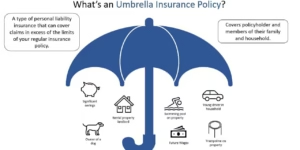
Personal umbrella insurance is a key layer of defense for your money. Some think it is a luxury. They think only the very rich need it. That is not true. It is a low-cost shield for home owners, high earners, and growing families. This guide shows how it works. It shows how it fits with your other policies. It tells you what it costs. It also lists the signs that show you need it.
1. How It Works: Base Limits Versus Umbrella Policy
Your car and home policies come with basic cover for harm you cause. It pays when the law says you are to blame. It pays for hurt to other people. It also pays for damage to their things. But base limits are set for small and common losses. They are not set for huge ones. Most home policies set a liability limit of $100,000 to $300,000. Car policies often stop at $250,000 per person and $500,000 per crash. People write this as $250k/$500k. These caps may sound high. But a big claim can pass them fast.
Sometimes a court says you owe more than your limits. Then you must pay the rest on your own. This is called an excess judgment. With it, a court can go after what you own. It can put a lien on your home. A lien is a legal claim on your home or land. The court can also take part of your pay for a long time. This is called wage garnishment. It can last for years. That is why an excess judgment can hurt so much.
Umbrella cover fixes this problem. It sits right above your car, home, and boat policies. Think of it as a second layer. Your base policy pays first. When it runs out, the umbrella policy steps in. It adds extra cover for harm you cause. Umbrella limits start at $1 million. They can rise to $5 million or more.
2. What Does Umbrella Insurance Cover? (And What It Leaves Out)
One big plus of an umbrella policy is how much it covers. It lifts the limits on claims that your base policies already cover. It also covers some risks that home policies leave out. This wide reach is a key part of its value.
Key areas of cover often include:
- Major injury claims: Bad hurt to other This can come from car crashes, pool mishaps, or falls at your home.
- Major damage claims: Large loss of things that other people Your car, your kids, or your pets may cause it.
- Good name claims: Legal help if someone says you told lies about This covers libel, slander, and harm to a good name. It also covers a claim of false arrest.
- World-wide cover: Your cover goes with you around the It applies on trips abroad. It applies when you drive a rental car. It applies when you use a home or land in another country.
- Legal defense costs: It pays for lawyers and court It also pays for other legal bills. These costs are paid apart from your limits.
“An umbrella policy does not just guard what you own today. It also guards the pay you will earn in the future. After a huge claim, a court could take a share of your pay for years. Umbrella cover helps stop that.”
Umbrella cover also has clear limits. Know what it leaves out. Then a gap will not catch you by surprise.
- Harm to you: Umbrella cover pays only for harm you cause to It does not pay for your own doctor bills. It does not pay to fix your own things.
- Business and job risks: Business work, trucks used for work, and job errors need their own policies. These are known as commercial general liability and professional liability cover.
- Acts done on purpose or crimes: Harm you cause on purpose is not This includes damage, hurt, and illegal acts. The law bars this cover.
- Contract disputes: Legal fights over broken private contracts are not
3. Video: A Look at Excess Liability and Legal Risk
A video here to gives a clear look at how extra liability cover works. It shows how this cover fits into the way you manage the risk to your money. This PDF does not include the video.:
4. Key Risk Triggers: Check Your Own Risk
Many people think that only high earners need extra cover. This is a mistake. The law sets what you owe by the harm done to the hurt person. It does not look at how much you own. Your risk is not just about wealth. It is about the harm you might cause. Picture a bad car crash that leaves a person with a lasting disability. That person may claim for doctor bills, lost pay, and pain. Those awards can pass your limits in seconds.
Ask yourself if any of these risks are part of your daily life:
|
Risk Area |
What Could Go Wrong |
Claim You Could Face |
| Teen drivers at home | New drivers crash more often than others. | A crash with many cars and bad harm to people. |
| Risky home features | Pools, trampolines, or steep walls at home can be risky. | Guest hurt, kid mishaps, and suits over an unsafe home. |
| Pet owner | Big dogs or guard dogs may act in a fierce way to guard their turf. | Dog bites, face wounds, and lasting scars. |
| Rental home owner | You rent homes or space to tenants. | Tenant hurt, slip and fall cases, and suits over poor upkeep. |
| Public profile | You post often online, speak in public, or help in your town. | Online libel, harm to a good name, and slander claims. |
If one or more of these fit your life, your risk is higher. An umbrella policy may be worth a close look. Each of these risks can lead to a claim that is larger than your base limits.

5. Cost and Benefit: What a Policy Is Worth
Umbrella cover is one of the best deals in insurance. Your base policy pays the first part of any loss. It pays up to $300,000 or $500,000. The umbrella firm only pays in a huge loss. So the risk to that firm is small. That is why the price is so low for the cover you get. You may ask if it is worth it. For most people, the price is small. The risk it covers is huge.
Most often, a $1,000,000 umbrella policy costs $150 to $300 a year. Going from $1 million to $2 million adds about $75 to $100 a year. So each extra dollar of cover costs less. Higher limits give you more for your money. To get an umbrella policy, you must first have a set level of base cover. The firm will ask for minimum base limits. Here are the usual rules:
- Auto policy baseline: $250,000 for injury per person and $500,000 per crash. Add $100,000 for damage to things. Or you can have a $500,000 combined single limit.
- Home policy baseline: $300,000 to $500,000 in liability
Your limits may be below these levels. If so, you can raise them. This costs only a small amount more. Do this before you add the umbrella layer.
6. Step-by-Step Plan to Get Extra Cover
A good umbrella policy starts with a full check of your base cover. Follow these steps in order. Each step builds on the one before it:
- Work out your risk: Add up what you own. This includes home equity, taxable investment accounts, and savings that the law does not Then think about the pay you may earn over the next 10 years. This tells you how much is at risk.
- Check your base policies: Review your home, auto, renter, and fun vehicle Confirm your limits. Make sure there are no gaps between your base policies and the umbrella layer.
- Compare bundle deals: Most firms want to issue the umbrella policy They want to be the same firm that holds your car and home cover. Bundling them often gives you a discount on all three.
- Find special risks: Do you serve on a non-profit board? Do you rent out homes or space? Do you own a boat? If so, check that your umbrella policy clearly covers these acts.
7. Final Verdict and Key Advice for Umbrella Policy
A sound money plan needs two things in equal parts. It needs growth. It also needs safety. Growth is only half of the job. Relying only on the limits of your car and home policies is risky. It leaves your savings, home equity, and future pay open to big legal claims. An umbrella policy adds a strong layer of safety. It helps make sure that a sudden crash does not harm your long-term money plans.